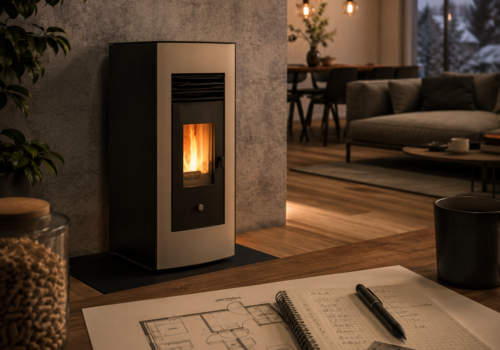
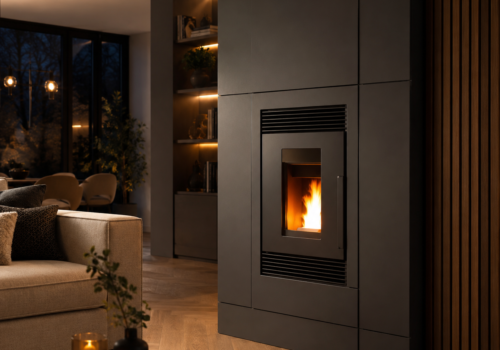
How does a pellet stove work with pellets?
In the search for sustainable and efficient ways to heat your home, the pellet stove increasingly popular. But how a pellet stove works exactly? In this comprehensive article, we explain to you step by step how this modern heating solution works, its advantages, what to look out for when buying it and how to make the best use of a wood pellet stove.

What is a pellet stove?
A pellet stove is an advanced stove designed specifically to operate on wood pellets. These small cylindrical pellets are made from compressed sawdust and wood waste. The stove burns these pellets automatically and efficiently, releasing heat that is used to heat one or more rooms in the house.
What are wood pellets?
Wood pellets are compressed wood pellets that serve as fuel for pellet stoves. They are produced from residual wood such as sawdust and wood chips. Thanks to their low moisture content and high energy density, they burn very efficiently and cleanly.
- Durable: Made from waste wood
- Efficient: High efficiency due to low humidity
- Clean: Low ash formation during combustion
How exactly does a pellet stove work?
The operation of a pellet stove with pellets is based on automatic combustion. This process involves several steps:
1. Automatic supply of pellets
At the top of the stove is a reservoir (also called a hopper) into which you place the wood pellets. A built-in auger automatically transports the right amount of pellets to the combustion chamber.
2. Ignition via coil
As soon as you switch on the stove (usually via a digital display or remote control), the glow coil activates. This causes the first load of pellets to ignite.
3. Combustion in closed chamber
The pellets are burned in an enclosed firebox. A fan regulates the air supply, ensuring optimum combustion. This results in hardly any smoke and fine dust.
4. Heat diffusion via convection fan
The resulting warm air is dispersed via a built-in fan. Some models can also be connected to the central heating system or supply hot water.
5. Exhaust gas removal
The flue gases are led outside via a special flue pipe. This makes it possible to install a pellet stove even without a chimney.
Advantages of heating with a pellet stove
Heating with pellets offers numerous advantages over traditional heating methods such as gas or oil:
- Durable: Pellets are carbon-neutral because they are residual products from wood processing.
- Cost-effective: Pellets are cheaper than fossil fuels.
- Simple to use: Fully automatic controls and programmable thermostats.
- Clean: Low particulate emissions and low ash formation.
- Atmospheric: The flames add extra cosiness to the home.
Disadvantages to consider
Of course, there are also some concerns when using a pellet stove:
- Acquisition cost: The initial investment is higher than for traditional stoves.
- Temporary maintenance needed: Regular cleaning of ash pan and pane required.
- Supply electricity needed: Does not work without power (for fans and ignition).
Points of attention when buying a pellet stove
When buying a new pellet stove, consider the factors below:
- Power: Choose the right power rating (in kW) based on the area to be heated.
- Pellet storage room: Make sure you have enough storage space for your wood pellets.
- Flue installation: Have it professionally installed for safety.
- Maintenance contracts: Regular maintenance extends the life of your device.
Smart features and automation
Today, many modern pellet stoves are equipped with smart technologies such as WiFi control, automatic cleaning and programmable weekly programmes. This allows you to save energy while enjoying maximum comfort.
Costs: What does heating with pellets cost?
One tonne of wood pellets costs on average between €300 and €400 (price level 2024). An average household consumes between 1 and 2 tonnes per year depending on insulation and intensity of use. With this, annual heating costs are often lower than for gas or fuel oil.
| Energy source | Cost per year (average) | Sustainability score |
|---|---|---|
| Pallets (wood) | ± €600 - €800 | Very high (CO₂-neutral) |
| Natural gas | ± €1200 - €1500 | Medium (fossil fuel) |
| Electricity (central heating) | ± €1800 - €2200* | Medium to high* |
| *Depending on source: green power vs grey power. | ||
Sustainability: Is heating with pellets environmentally friendly?
Sure! Heating with wood pellets is considered sustainable because it is renewable biomass derived from waste streams. Moreover, emissions are significantly lower than with fossil fuels. Just make sure you use certified pellets such as ENplus-A1 or DINplus for optimal performance as well as environmental benefits.
Placement and installation: What's involved?
Always ensure professional installation by a recognised installer. The installation consists of:
- Connection to flue or gable outlet;
- Connection to electricity;
- Possible integration with CV system;
- Finishing according to safety standards (NEN standards).
Also check out the website of the Rijksdienst voor Ondernemend Nederland (RVO), where subsidies for sustainable heating systems are announced such as ISDE schemes.
Tips for optimum use of your pellet stove
- Choose quality pellets: Certified pellets ensure less ash formation and better combustion.
- Clean your stove regularly: This prevents malfunctions and extends the service life.
- Use thermostat smartly:: Set programmes based on attendance at home.
- Ensure good insulation:: This way, heat is retained longer in the house.
Cooperation with solar panels or heat pump?
Smart combining is the motto! A pellet stove can work perfectly well with other sustainable solutions such as solar panels or heat pumps. This way, you reduce your ecological footprint even further and save on energy costs.
Local regulations & subsidies in the Netherlands and Belgium
Both the Netherlands and Belgium have specific rules regarding placement, emission standards and subsidies for biomass heating such as pellet boilers or fireplaces. Therefore, always check with your municipality or check websites such as:
- RVO.nl - ISDE subsidy Netherlands
- Vlaanderen.be - Heating premiums Belgium
- Milieu Centraal - Energy saving tips EN
Frequently asked questions on "How does a pellet stove work?" (FAQ)
- How many pellets does an average stove consume per day?
- Between 1 to 3 kg per hour depending on power, insulation level and outdoor temperature.
- Are harmful substances released during combustion?
- No, provided certified pellets are used and correct installation is carried out in accordance with legislation.
- Will I get a subsidy for my pellet stove?
- Since January 2020, there is no longer a national ISDE subsidy for individual pellet stoves in the Netherlands, but some municipalities still offer local schemes. In Belgium, premiums still exist under certain conditions.
- Can multiple rooms be heated?
- Sure! There are so-called "channelling pellet stoves" that channel hot air through pipes to other rooms or systems that connect to central heating systems (hydraulic systems).
- Does a pellet stove also provide hot water?
- Some models can be linked to buffer tanks to also provide domestic hot water in addition to space heating.
- Am I without heat in case of power failure?
- Since electrical components are essential (such as fans), the stove will not operate without power unless equipped with emergency power supply or battery backup system.
Conclusion: is a pellet stove for you?
One thing is clear: if you are looking for a sustainable, efficient yet cosy way to heat, a pellet stove on wood pellets definitely worth considering!. With relatively low operating costs, simple operation and environmentally-friendly features, this type of heater is a smart investment in your home comfort and future-proof home heating.