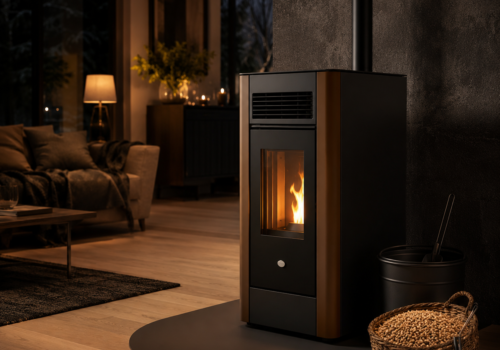
How far should a pellet stove be from neighbours?
A pellet stove is a popular and sustainable way to heat your home. But installing such a stove involves more than just choosing the right model. A frequently asked question is: how far should a pellet stove be from neighbours? In this article, we dive deep into the regulations, technical requirements and practical tips To avoid nuisance and live in harmony with your neighbours.

What is a pellet stove?
A pellet stove is a type of heating appliance which uses compressed wood pellets (pellets) as fuel. These stoves are popular for their high efficiency, low CO2 emissions and ease of use. The heat is spread via convection or ventilation, and the flue gases are discharged through a flue.
Advantages of a pellet stove
- Sustainable: Pellets are made from residual wood and are a renewable energy source.
- Energy-efficient: Modern models achieve efficiencies as high as 90%.
- Low emissions: Compared to traditional wood-burning stoves they emit less particulate matter from.
Ready for sustainable heating? Buy your pellet stove here.
Pellet stoves Gamma
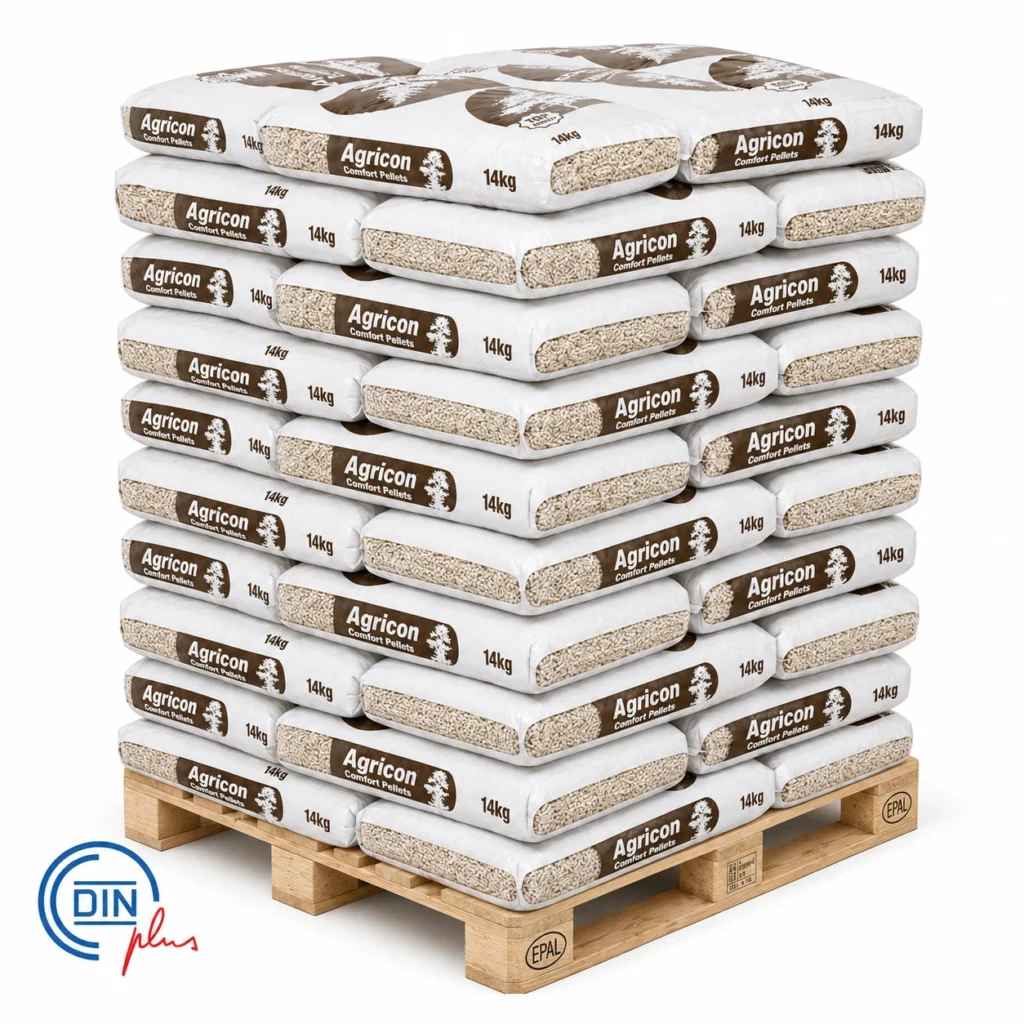
Agricon Comfort Pellets – full pallet – DINplus – 6mm
Price range: €5.45 through €355.00Fire Sticks Pellets – full pallet – Enplus A1 – 6mm
Price range: €6.30 through €409.50Graanul Pellets – full pallet – Enplus A1 – 6mm
Price range: €6.60 through €429.00


Why is distance from neighbours important?
When placing a pellet stove you have to consider not only your own comfort, but also that of your neighbours. The smoke exhaust may cause odour or smoke nuisance if it is not placed correctly. Therefore, there are legal rules and guidelines which determine how far a smoke outlet must be from the property boundary or neighbours' windows.
Legal rules in the Netherlands
In the Netherlands, there are no specific national laws specifying exactly how far a pellet stove or neighbour's smoke outlet must be in place. However, general rules apply from the Building Decree, the Environmental Law (Wabo), and municipal regulations.
Building code 2012
According to the Building Code, installations such as flue pipes must meet safety, health and environmental requirements. For example, the discharge must be sufficiently high to prevent smoke spreading to neighbouring properties.
Neighbourhood law (Civil Code)
Article 5:37 of the Civil Code states that you may not cause unlawful nuisance to your neighbours. This includes smoke, soot and smell. Even if your installation technically meets all the requirements, you can still be held liable for nuisance.
Municipal regulations
Some municipalities apply stricter rules for wood-burning installations such as pellet stoves. Always check with your municipality to specific provisions on distances from yard boundaries or vents at neighbouring houses.
Recommended minimum distances for smoke extraction
Although there is no national standard that literally says "this distance must be maintained", manufacturers and installers often provide guidelines based on safety and comfort:
- At least 0.5 metres distance from property boundary
- At least 2 metres horizontally from windows or vents of neighbours
- Top of smoke outlet at least 1 metre above roof ridge or adjacent roof plane
These distances are intended to prevent flue gases from entering directly into windows or air intakes of neighbours.
Technical requirements for safe installation
Flue gas outlet
The flue should be resistant to high temperatures (at least T200) and condensation (class W). Preferably use double-walled insulated pipes to minimise fire risk.
Draft control and ventilation
Ensure sufficient draft in the flue to prevent recoil. A good air supply is essential for complete combustion and minimal emissions.
Hallmark and certification
Always choose a CE-certified pellet stove that complies with Ecodesign guidelines (EU regulation 2015/1185). This guarantees low emissions and high efficiency.
Tips to prevent nuisance for neighbours
- Place the exhaust as high as possible on the roof, preferably above the ridge line.
- Avoid placement on facades adjacent to neighbouring houses.
- Opt for automatic cleaning and high-quality pellets to reduce odour and soot formation.
- Have annual maintenance carried out by an approved installer.
- Consult with your neighbours in advance about your plans. Good communication prevents conflicts afterwards.
Possible consequences in case of incorrect placement
Place your the flue is too tight near your neighbour's property line or windows? Then you run the risk of complaints, legal proceedings or even compulsory alterations:
- Neighbours can object through municipality or judiciary.
- Possible fines or periodic penalty payments for violation of municipal rules.
- Liability for health damage caused by particulate matter or carbon monoxide leakage.
Better prevention than cure: consult with experts and neighbours
The installation of a pellet stove is bespoke. Get advice from a certified installer who is familiar with local regulations. And just as important: involve your neighbours in the process. Transparency prevents misunderstandings and strengthens the relationship between them.
Conclusion: How far should a pellet stove be from neighbours?
No unambiguous legal distance has been established in the Netherlands, but guidelines from the Building Decree, municipal provisions and common sense together form the framework:
- Make sure the flue pipe at least several metres away from windows or air intakes of neighbours.
- Place the duct as high as possible on the roof to minimise dispersion.
- Choose certified products and have them professionally installed.
- Avoid conflicts by timely consultation with local residents.
Think ahead, inform well and choose quality - then you will enjoy warm winter days carefree without inconveniencing others.
Frequently asked questions (FAQ)
Do I need to ask my neighbours' permission to install a pellet stove?
No, not necessarily. But consultation is strongly recommended if your installation will be close to their home or could potentially cause a nuisance.
What is the minimum distance between my flue and my neighbour's window?
Recommended minimum two metres horizontal distance to avoid odour or smoke nuisance.
Is there any difference between indoor and outdoor installation in terms of distance from property boundary?
Indoor installations with roof penetration are often safer in terms of propagation than facade penetrations. Outdoor installations need to take extra account of wind direction and proximity to other buildings.
Can municipalities set stricter requirements than national regulations?
Sure! Municipalities may have additional provisions in their zoning or environmental policies. Always check local regulations before you start with install.
What if my neighbour complains about my pellet stove?
Do they contact you or report it to the municipality? Try to come to a solution together first. If this does not work, enforcement can act if there is unlawful nuisance according to Article 5:37 of the Civil Code.
Pallet supplier nearby?
Wood pellets are easily available in our online shop, delivery in Belgium & Netherlands
Wood pellets Gamma
Agricola Pellets Bag 15kg - Enplus A1 - 6mm
Original price was: €7.10.€6.70Current price is: €6.70.
AKZ Premium Pellets Bag 15kg - Enplus A1 - 6mm
€7.00Jaso Pellets Bag 15kg - Enplus A1 - 6mm
Price range: €6.50 through €422.50My Premium Pellets Bag 15kg - Enplus A1 - 6mm
Original price was: €7.00.€6.60Current price is: €6.60.