Will pellet stoves be banned soon?
The popularity of pellet stoves has increased significantly in recent years. Many households in the Netherlands choose this relatively cheap and sustainable way of heating. But with growing concerns about air quality, CO2 emissions and stricter European environmental rules raises the question: will pellet stoves be banned soon?

What exactly is a pellet stove?
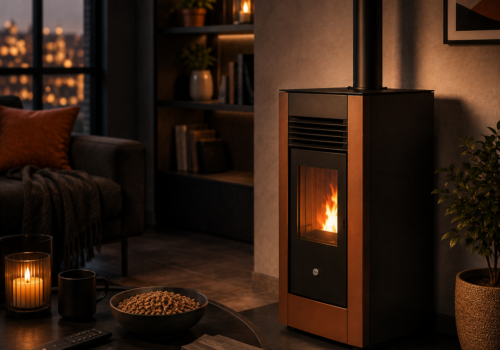
A pellet stove is a heating system that uses compressed wood pellets - also known as pellets - as fuel. These pellets are automatically fed into the combustion chamber, making the system efficient and easy to use. The stove heats the room by means of a fan that disperses warm air.
Advantages of pellet stoves
- Sustainable alternative for fossil fuels
- Low operating costs
- Adaptable heat output
- Automatic control via thermostat or app
Why might there be a ban on pellet stoves?
Although pellet stoves are considered sustainable, there are growing concerns about their impact on the environment and public health. There are several reasons why a possible ban on these stoves is being considered:
Air pollution from particulate matter
Fine dust emissions is a major criticism of wood-fired systems such as pellet stoves. The burning of pellets releases small particles that can be harmful to health, especially with prolonged exposure.
According to RIVM, wood-burning stoves and pellet systems contribute about 10% of total particulate emissions in the Netherlands (Source: RIVM). In densely populated areas, this can lead to health problems such as asthma, bronchitis and cardiovascular disease.
Tightening European regulations
The European Union has set stricter standards for emissions from heating plants for climate policy purposes. The so-called Ecodesign directive (EU 2015/1189) sets requirements for the efficiency and emissions of pellet stoves, among others.
Since January 2022, only stoves with a certain energy efficiency class may be sold. Many older models do not meet these requirements and are therefore no longer allowed to be newly installed.
National policies and municipal bans
Some municipalities have now taken steps to restrict the use of wood-burning installations. For instance, cities such as Utrecht and Amsterdam are considering establishing zones where the use of wood or pellet stoves will be banned during periods of poor air quality.
Moreover, the Dutch government has indicated in its Climate Agreement that it wants to move towards a natural gas-free built environment. This means critically examining all forms of combustion - including biomass such as pellets.
Will there actually be a nationwide ban?
Currently, there is no official nationwide ban on the use or sale of pellet stoves in the Netherlands. However, there are signs that this could change in the future, depending on how strictly environmental standards are enforced.
Key points from policy documents:
- Energy performance requirements (BENG): new homes must be nearly zero energy, making direct combustion less attractive.
- Sustainable Heat Act (under development): seeks collective, sustainable heat solutions with no local emissions.
- National environmental policy papers: are betting heavily on electrification and heat pumps as alternatives.
Possible alternatives to pellet heating
If you are considering replacing or discontinuing your current or planned pellet system, there are several alternatives available:
Sustainable alternatives to heating:
- Heat pumps (air-water or ground source)
- Solar water heaters combined with electric supplementary heating
- Infrared panels for zone heating
- Connection to a heat network if available in your area
Heat pumps, for example, are fully electric and emit no CO2 or particulate matter locally. They fit well within future regulations and can also be combined with solar panels to provide completely energy-neutral heating.
Existing users: now what?
Existing users of pellet plants need not worry about an immediate ban for the time being. However, it is wise to:
- Regular maintenance implement to reduce emissions;
- Ecodesign-compliant models to be used;
- Grants for sustainability to keep an eye on;
- Inform themselves about municipal regulations around wood burning.
Criticism of possible ban: interest groups speak out
Some interest groups such as the Dutch Biomass Energy Association (NVBE) point out that modern pellet systems are much cleaner than older wood-burning stoves. According to them, a generic ban would also unfairly hit efficient systems that contribute to the energy transition.
They therefore call for stricter enforcement on outdated plants as well as incentives for modern systems with low emission values.
Future forecast: what can we expect after 2024?
By the end of 2024, more clarity is expected from both Brussels and The Hague on how to deal with small-scale biomass installations such as pellet stoves. In scenarios where health effects outweigh CO₂ reduction, a gradual phase-out is likely.
At the same time, biomass remains part of Dutch energy policy for the time being - especially for large-scale applications such as district heating or industrial processes.
Conclusion: Will pellet stoves soon be banned?
No, there is currently no immediate nationwide ban on pellet stoves in the Netherlands. However, it is clear that their future is under pressure from stricter environmental regulations, municipal initiatives and changing societal views on health and sustainability.
Existing users would do well to actively inform themselves about developments and consider more sustainable alternatives such as heat pumps or connection to a heat network.
Frequently asked questions (FAQ) on "Will pellet stoves be banned soon?"
1. Are pellet stoves already banned in the Netherlands?
No, currently they are not banned. However, there are stricter requirements for new installations since January 2022 according to European Ecodesign directives.
2. Why might pellet stoves be banned?
Due to concerns about air pollution (particulate matter), carbon emissions and health risks, their future is being reconsidered within national policy.
3. Can I continue to use my existing pellet stove?
As long as it is properly maintained and meets the applicable standards, you may continue to use your existing installation. However, municipalities may set additional rules.
4. What are good alternatives to a pellet stove?
- Air-water heat pump;
- Ground source heat pump;
- Solar water heater with electric supplementary heating;
- Connection to heat grid;
5. Will I get a subsidy if I switch to a more sustainable system?
Sometimes they do. View current schemes via the RVO website (ISDE subsidy page RVO.nl) or check with your local council.